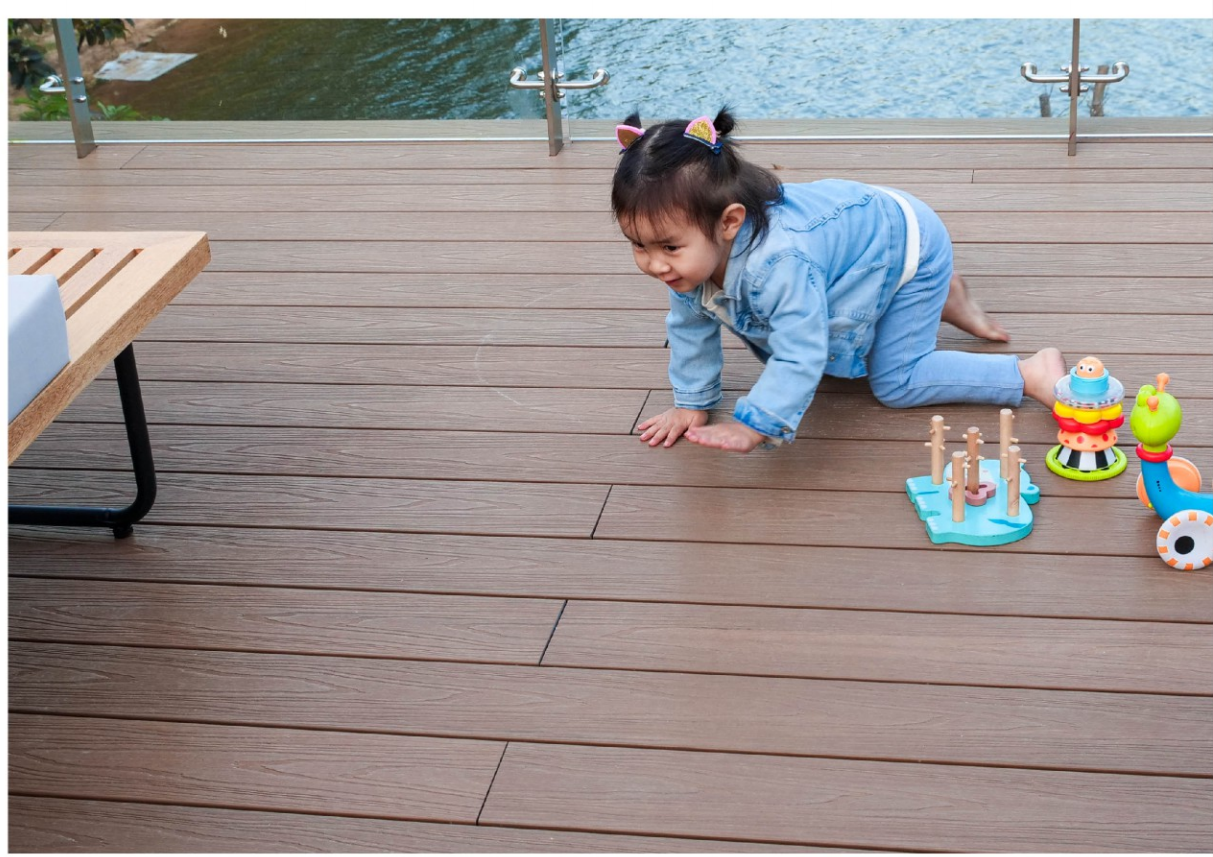


What Is 3D Embossed Flooring?
3D embossed flooring is a type of ground decorative material with three - dimensional embossed textures on its surface. Through special processes, a three - dimensional effect with concave - convex texture—simulating natural or artistic patterns—is created on the flooring’s surface. Its core feature lies in "hierarchical visual appeal and textured tactile feel," distinguishing it from traditional flat flooring with a single, smooth surface.
I. Core Features: 3D Textures + Multiple Advantages
1. 3D Textures that Replicate Natural Textures
Embossed patterns mostly mimic the original textures of real materials, with common types including:
· Natural Series: Solid wood grain (e.g., annual rings and knot textures of oak and teak), stone textures (e.g., cracks in marble, granular feel of granite), and ceramic tile textures (e.g., concave - convex glazed surfaces of vintage tiles);
· Artistic Series: Geometric patterns (diamonds, wave patterns), retro patterns (European embossments, Chinese fretwork), and bionic textures (bark patterns, woven patterns).
These textures are created through processes such asembossing, carving, and molding. The concave - convex height typically ranges from 0.1mm to 2mm (adjusted based on usage—low convexity for household use, higher convexity for commercial decorative flooring). Visually, they offer a stronger sense of hierarchy; tactilely, distinct texture undulations can be felt.
2. Better Functionality Than Flat Flooring
· Enhanced Slip Resistance: The 3D concave - convex texture increases friction between feet and the flooring, making it especially suitable for damp scenarios such as bathrooms, kitchens, balconies, and outdoor poolside areas (e.g., the "composite panels for swimming pools" you mentioned earlier often adopt 3D embossed textures to improve slip resistance);
· Practical Flaw Concealment: Flat flooring easily shows dust and scratches, while the concave - convex structure of 3D embossed flooring reduces the visual visibility of minor scratches and stains. It remains cleaner after daily cleaning and has higher durability;
· Improved Sound Insulation & Foot Comfort: Some 3D embossed flooring (e.g., composite materials) has a texture layer that aids in cushioning, providing a softer walking feel and reducing the transmission of footstep noise (ideal for household bedrooms and children’s rooms).
II. Difference from "3D Printed Flooring" (Common Confusion)
Many people confuse "3D embossed flooring" with "3D printed flooring." Their core difference lies in whether there is a 3D tactile feel:
· 3D Embossed Flooring: Has real concave - convex undulations on the surface (physical 3D), with both hierarchical vision and texture;
· 3D Printed Flooring: Only presents a "visual 3D effect" on a flat surface through printing technology (e.g., light and shadow simulating textures). The surface is smooth with no tactile undulations (visual 3D).
In simple terms: If you can feel raised textures when touching, it’s 3D embossed flooring; if it feels smooth but looks textured, it’s 3D printed flooring.
In summary, 3D embossed flooring combines "decorativeness" and "practicality." It not only enhances the design sense of a space through 3D textures but also adapts to various complex scenarios, making it one of the most popular flooring types in current household and commercial decoration.


