




introduction to the manufacturing process of glazed ceramic tiles
Glazed ceramic tiles,whose standard english term is**glazed ceramic tile**,have a core manufacturing process that lies in the preparation and application of the"Glaze."Modern production primarily utilizes automated production lines,and the process flow can be summarized into the following key steps:
---
**core manufacturing process**
step 1:Body(biscuit)raw material preparation
***raw materials**:Mainly composed of high-quality natural minerals such as clay,feldspar,and quartz sand.
***process**:After precise proportioning,these raw materials undergo:
1.**crushing and grinding**:Large raw materials are crushed and then wet ball-milled into a very fine slurry.
2.**spray drying**:The slurry is passed through a high-temperature spray tower,where it is instantly dehydrated into fine,uniform,and free-flowing powdered body material.this step is crucial for the subsequent pressing and forming.
step 2:Pressing and formin
The prepared body powder is automatically filled into molds.*it is then pressed under high pressure by large-tonnage presses(reaching up to thousands of tons)to form hard,green tiles(biscuits)with specified dimensions and shapes.the pressure and precision of the press directly determine the tile's density and strength.
step 3:Drying and biscuit firing(optional)
***drying**:The pressed green tiles contain a small amount of moisture and need to be sent into a drying kiln to enhance their strength and prepare them for the subsequent glazing process.
***biscuit firing**:In some processes(especially for single-firing techniques),the green tiles may first undergo a low-temperature bisque firing to give them sufficient strength to withstand the glazing line.
step 4:Glazing-the soul of the"Colored glaze"this is the key step that imparts color,texture,and functionality to the tiles.modern technology allows for various effects:
***engobe/base glaze**:A base glaze layer is first applied to the tile body as a foundation.***top glaze/pattern decoration**:***screen printing**:A traditional but widely used technique that transfers the glaze pattern onto the tile surface through a screen.allows for multiple color registrations but offers less three-dimensionality.
***roller printing**:A more advanced technique using an engraved rubber roller for continuous printing,resulting in finer and higher-resolution patterns.
***inkjet printing**:**the current most mainstream and advanced technology**.similar to an office printer,it uses digital files and special ceramic inks(glazes)to directly print any high-definition,multi-colored pattern onto the tile body,including complex textures like imitation stone or wood,with极高的flexibility.
step 5:Firing and the roller kiln
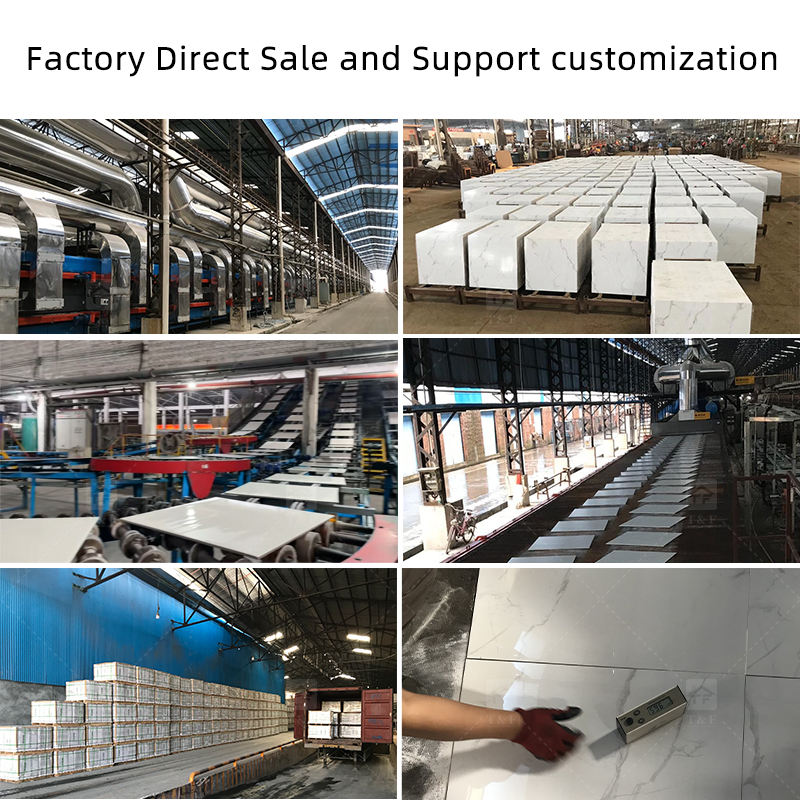
*the glazed tiles enter a long**roller kiln**for high-temperature firing.*inside the kiln,the tiles follow a pre-set temperature curve through the stages of preheating,high-temperature firing,and cooling.
***during high-temperature firing**(typically reaching above 1200°c),complex physical and chemical reactions occur:
***body**:Vitrifies and densifies,becoming hard and wear-resistant.***glaze**:Melts into a glassy layer,firmly bonding with the body to form a smooth,dense,wear-resistant,and stain-resistant surface.
*depending on the process,it can be divided into:***single firing**:The body and glaze are fired together in one kiln cycle.highly efficient and lower cost.
***double firing**:The biscuit is fired first(biscuit firing),then glazed and undergoes a second firing(glaze firing).results in richer glaze effects and higher quality,but at a higher cost.
step 6:Post-processing and inspection
***edging/chamfering**:The tile edges are ground to achieve more precise dimensions and a more aesthetic installation appearance.
***grading and inspection**:Through automated inspection lines and manual checks,tiles are strictly graded and sorted based on standards for size,flatness,color variation,and surface defects.
***packaging**:Qualified products are finally automatically packaged and sent to the warehouse.
main characteristics of glazed ceramic tiles
Due to their unique manufacturing process,glazed ceramic tiles offer the following advantages:***highly decorative**:Rich and varied colors and patterns can meet various decoration style requirements.
***excellent physical properties**:High hardness,wear resistance,and high bending strength.***stable chemical properties**:The dense glaze surface offers strong stain resistance,is easy to clean,and resistant to acids and alkalis.
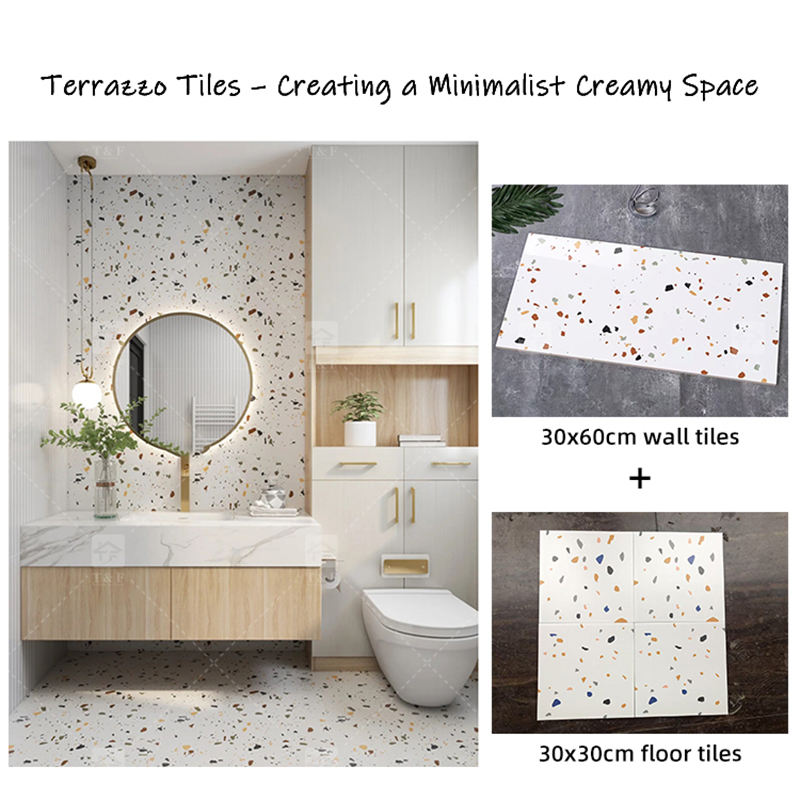
***wide range of applications**:Mainly used for interior walls and floors,such as in kitchens,bathrooms,living rooms,and public areas.


